


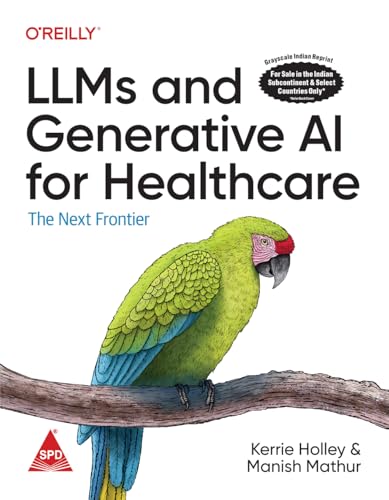
Generative AI is
rewriting medicine
from the molecule up.
From accelerating drug discovery to enabling earlier, more accurate diagnostics — generative models are becoming the most powerful tool in modern healthcare.
Chapter One
Drug Discovery, Reimagined
Traditional drug development takes 12–15 years and costs over $2 billion per approved drug. Generative AI compresses this by designing candidate molecules, predicting their interactions, and simulating outcomes before a single compound is synthesized.
De Novo Molecule Generation
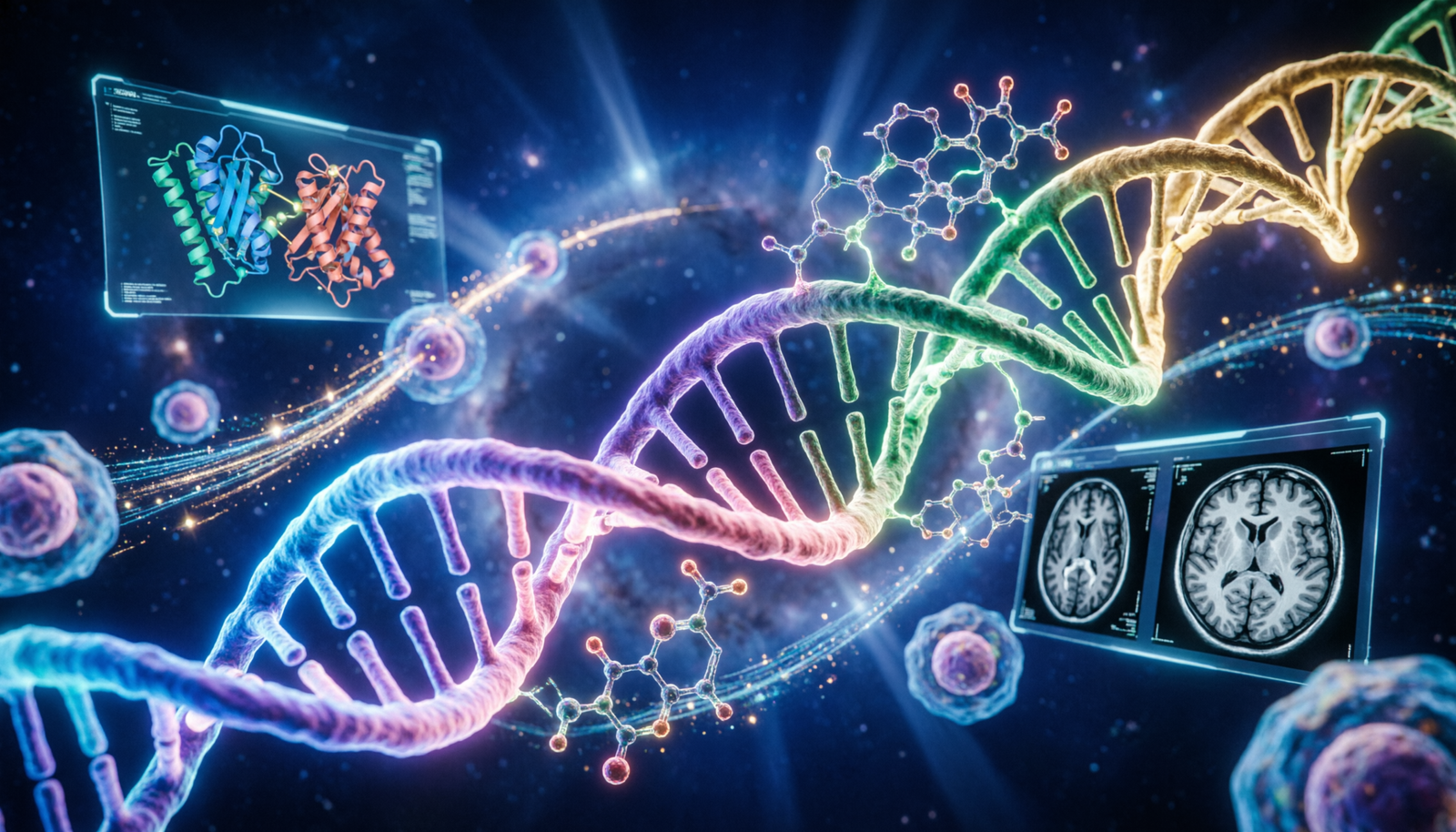
Generative models like VAEs and diffusion networks design novel molecules with target-specific binding profiles — exploring regions of chemical space previously unreachable by human intuition.
Protein Structure Prediction
AlphaFold2 and its successors have solved one of biology’s grand challenges. Generative AI now extends this to designing entirely new proteins with custom functions — potential new enzyme classes, antibodies, and biologics.
ADMET Property Optimization
AI models predict absorption, distribution, metabolism, excretion, and toxicity simultaneously — guiding chemists toward molecules that are efficacious and safe, far earlier in development.
Multi-Target Drug Design
Generative models can simultaneously optimize a drug candidate against multiple biological targets, overcoming resistance mechanisms and reducing side effects through polypharmacology approaches.
“Generative AI doesn’t replace the scientist — it gives them a telescope to see across the entire universe of possible drugs at once.”— Nature Biotechnology, 2024
Chapter Two
Diagnostics: Seeing What Humans Miss
Generative AI brings a new kind of clinical vision — synthesizing imaging, genomics, electronic health records, and even patient language to surface diagnoses earlier and more accurately than any single modality alone.
- Medical Imaging Analysis — Multimodal vision transformers detect subtle anomalies in X-rays, MRIs, and CT scans, flagging early-stage cancers and rare conditions that may be invisible to the human eye at first glance.
- Synthetic Data Generation — Privacy-preserving synthetic patient datasets allow AI to train on rare disease distributions, dramatically improving diagnostic accuracy for conditions where real data is scarce.
- Multimodal Clinical Reasoning — Large language models integrated with structured EHR data reason across labs, symptoms, and history to suggest differential diagnoses and flag drug interactions.
- Pathology & Genomics — Foundation models trained on vast slide repositories identify tumor subtypes and predict genomic mutations directly from H&E staining, skipping expensive molecular tests.
- Real-Time Monitoring — Generative models applied to wearable sensor data predict adverse events like sepsis or cardiac arrhythmia hours before clinical presentation.
Milestones
Key Breakthroughs
The Other Side
Challenges & Open Questions
Regulatory Pathways
Frameworks for approving AI-discovered drugs and AI diagnostics are still evolving, creating uncertainty for developers and healthcare systems.
Data Privacy
Training powerful models requires vast clinical datasets. Balancing utility with patient privacy and consent remains an unresolved ethical tension.
Model Hallucinations
Generative models can produce plausible-seeming but incorrect medical information, demanding rigorous validation before clinical deployment.
Access & Equity
AI breakthroughs concentrated in wealthy institutions risk widening global health disparities if deployment isn’t designed with equity in mind.
Clinical Trust
Physicians need interpretable, explainable AI recommendations — not black-box outputs — to integrate these tools confidently into care pathways.
Wet Lab Validation
Even the best AI-designed molecules must eventually be synthesized and tested. Bridging the simulation-to-lab gap remains a critical bottleneck.