

Core Components
of the Agentic Stack
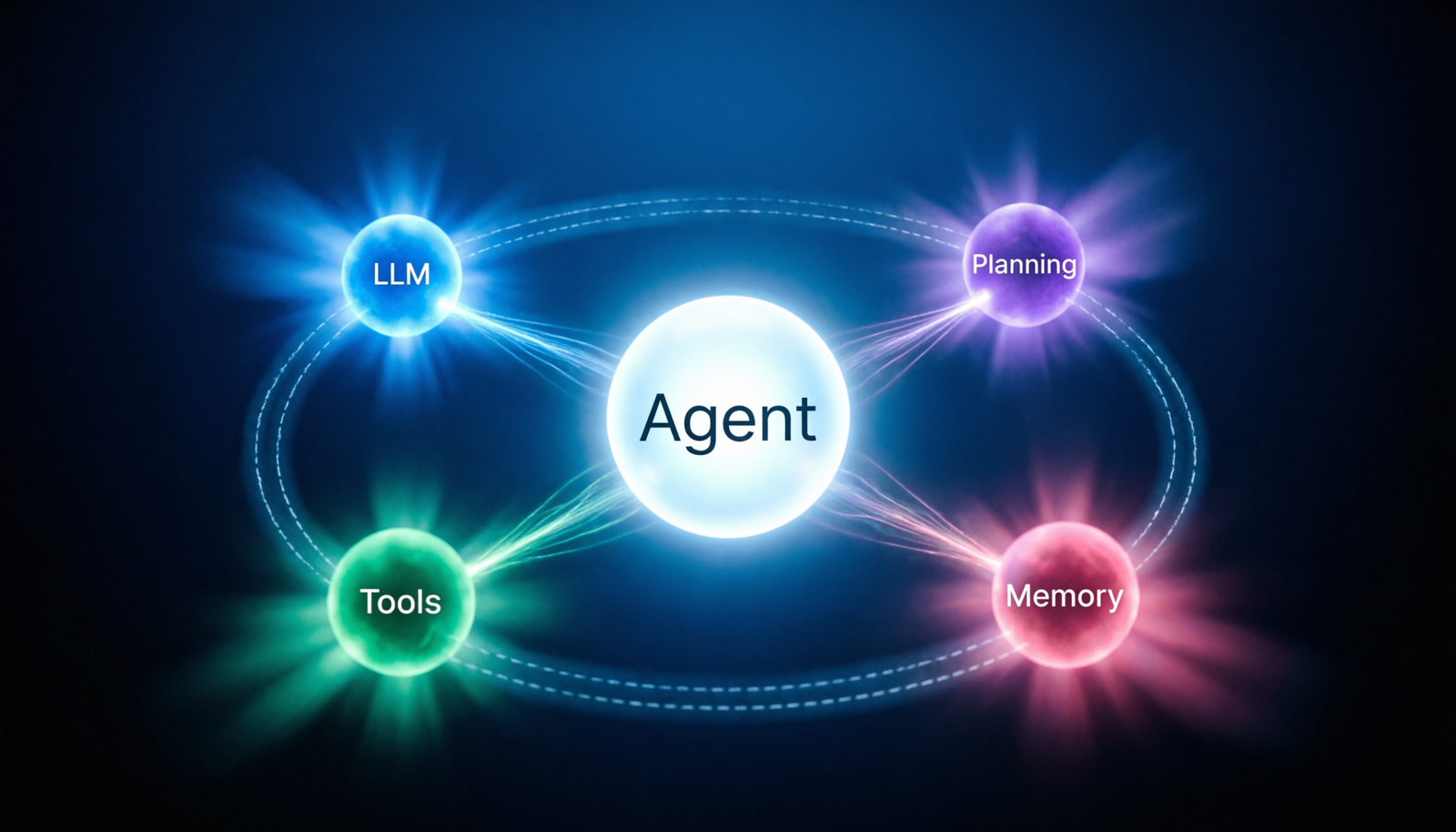
Four pillars that transform a language model into an autonomous agent capable of reasoning, remembering, and acting in the world.
Core
LLM
The reasoning engine at the heart of every agent. Large Language Models process natural language, understand context, generate coherent responses, and serve as the decision-making core that orchestrates everything else in the stack.
Planning
The strategic mind that breaks complex goals into executable steps. Planning modules leverage techniques like ReAct, Tree-of-Thought, or scratchpad reasoning to chart a course through multi-step tasks and recover gracefully from failures.
Memory
Agents need continuity. Memory systems span short-term context buffers, episodic logs of past interactions, semantic vector stores for knowledge retrieval, and procedural memory encoding learned skills — giving agents temporal awareness and depth.
Tools
The agent’s hands. Tool use extends an LLM’s reach beyond text: web browsing, code execution, API calls, database queries, file I/O, and computer use. Tools collapse the gap between language and real-world action.
How It All Flows
A typical agentic loop, step by step